Friday, November 18, 2016

2.5 Ugh Congress--I want to grow up to be a one-term Congresswoman

Washington Post: "Five ways Congress has changed dramatically since Obama's first State of the Union"

1. What was the makeup of the Congress that began in 2009 with Obama's first term?
The Speaker of the House was a Democrat, Nancy Pelosi, and in both chambers of Congress, Democrats held a majority by 16 seats in the Senate and a whopping 79 seats in the House. 

2. What is the current makeup of the Congress (Before the new one takes office in January)?
Republicans are the majority in both chambers, the largest in the House since the Great Depression.

3. Why is a 60 vote majority so critical in the Senate?
The party that gets 60 seats in the Senate is able to by-pass filibuster.

4. When did the Republicans take control of each house of Congress?
2010 for the House of Representatives and 2014 for Senate.

5. Why was Republican John Boehner forced out of his role as Speaker of the House?
In the fight against Obama to pass legislation for spending cuts and increased taxes, Boehner compromised, which conservatives never forgave.

6. What has been the main issue that Obama & the Congress have been fighting over?
They were fighting over spending cuts, with Republicans wanting billions of spending cuts and Obama refusing.

7. How are the Tea Party Caucus and the Freedom Caucus different from other Republicans?
They are the ultra-conservatives from the Republican group.

8. What is happening to moderate Democrats and moderate Republicans?  Which types of elections are they losing to lose their seats?
They are in the decline, falling prey to redistricting.

9. Why does the article predict that there will be little conflict between the president and Congress over his last year in office?
Nearing the end of a president's term, usually no major legislation is worth being considered and fought over. 

Thursday, November 10, 2016

2.4 I'm Still Not Sure What to Feel After This Election

Vox: "Why the Electoral College is the absolute worst, explained"
1. How does a candidate win in the Electoral College system?
When a candidate wins majority of popular votes in a state, all of the state's electoral votes technically goes to that candidate. Electoral votes are those cast by state-chosen representatives who make up the electoral college and will vote December 19.
2. When people cast their vote for president, what are they actually voting for?
The people are actually voting for a group of people, the electors, who will almost always vote according to the popular vote of the state they represent. 

3. When will the actual Electoral College vote count take place?
December 19

4. What 3 problems with the Electoral College does the article identify?
It undermines the importance of voting in most states that will inevitably be Democratic/Republican, thus deterring people from voting for the opposing party, and only swing states are focused on. 
The size of the margin of victory does not matter because it is not proportional to the number of electoral votes a candidate receives, thus resulting in the possibility of the disparity between popular vote and electoral vote.
It gives greater influence to small states since every state is guaranteed at least three electors, which overrepresents states like Wyoming or Montana while underrepresenting huge states like California. 

5. What are the penalties for an elector that does not vote as their state voted?
A fine and possibility losing reappointment in the electoral college. 

6. Why haven't there been many faithless electors before?
Parties painstakingly vet through their options and choose those who they are sure will loyally back the party's nominee. 

7. Why did the Framers choose to use the Electoral College?
They did not want the common people to directly choose the president because the commoners were uneducated, non-landowning and wouldn't have as good judgment as the elites would.

8. How did political parties change this process?
Parties made sure to pick electors who would vote loyally. 

9. What does the article say are the 3 reasons the Electoral College is a good system?
Usually, the victorious candidate is indeed the popular vote winner and swing states tend to agree with popular vote as well.
It ensures regional balance by requiring any regional candidate to get some support outside his or her region to be elected, thus limiting urban power grab. 
It is less likely for a nationwide recount. 

10. How do the American people feel about the Electoral College?
Polls show that majority (63%) of Americans want to eliminate it. 

11. Explain how the National Popular Vote Interstate Compact would work
It would be an agreement for states and DC to award all their electoral votes to the candidate who wins the national popular vote, thus ensuring that electoral victory aligns with popular victory. 

12. Which states would be opposed to this plan?
All Republican and swing states have not adopted it and Republican/small/rural states would oppose it. 

Friday, November 4, 2016

2.3 Do Interest Groups Make You SYAD?

Washington Post: Coca-Cola "Big Soda Sponsored 96 Health Groups--A Big Conflict of Interest, study says"

1. Which health based interest groups are identified as receiving funding from Coke?
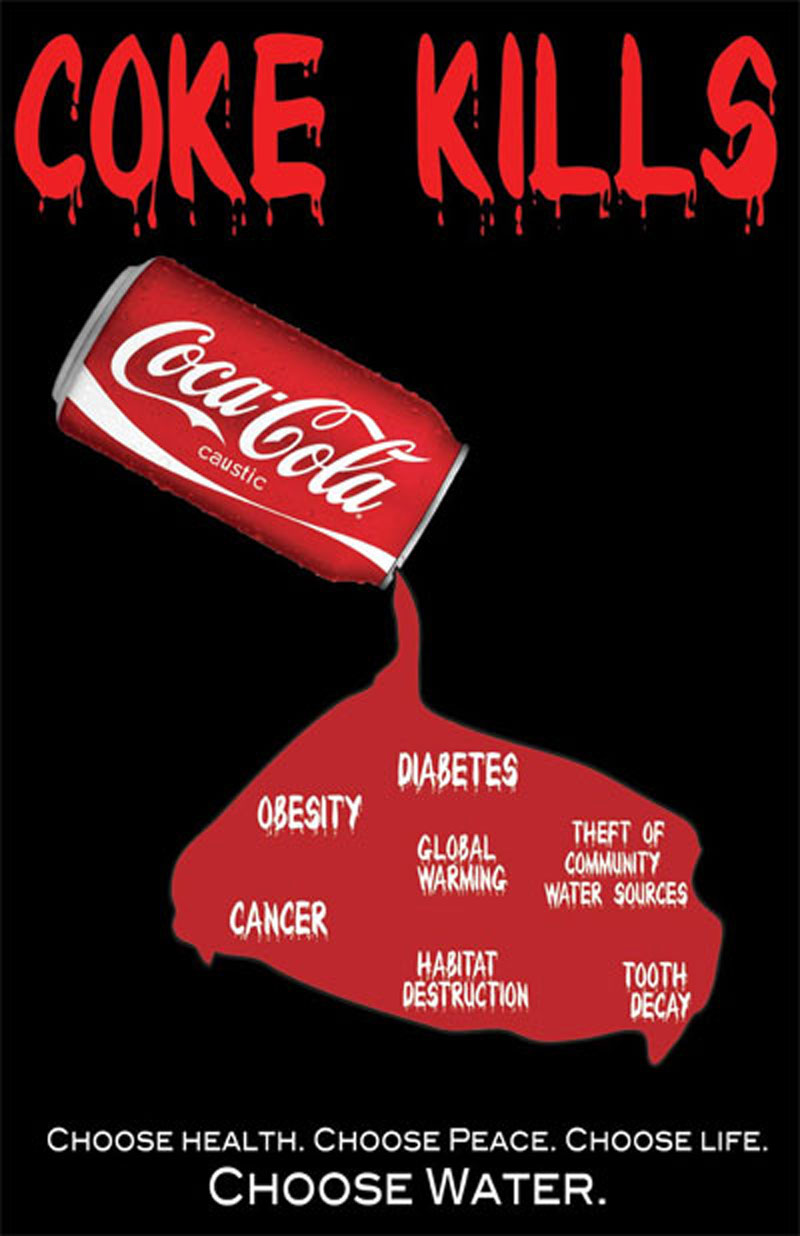
Shame on American Heart Association, American Diabetes Association, the Centers for Disease Control and Prevention, and the Junior Diabetes Research Foundation for getting sponsored by Coca-Cola Co. 

Image result for coca cola health issues2. What did these health-based groups do in return for Coca Cola?
These research groups publicize studies that downplay the major role of sugar in many health issues in order to make anything but sugar the enemy and boost Coke sales. 
3. What does the article claim the sugar industry did 50 years ago to the Journal of the American Medical Association Internal Medicine study?
The sugar industry had correspondence with JAMA, funding research by Harvard scientists to release study results that blamed cholesterol and saturated fat for heart disease rather than sugar. 

4. What kinds of policies is Coca Cola trying to lobby against now?
It is lobbying against soda taxes and soda bans. 

Los Angeles Times: Uber "Uber and Lyft are Winning at the State Capitol--here's why" 

5. What legislation was being considered in California that would have impacted ride sharing companies like Uber and Lyft?
The California Public Utilities Commission was planning to introduce new regulations that would have limited the ability to rent cars to drive them for Uber. 

6. How much money did those companies spend lobbying California lawmakers?
Combined, Uber and Lyft have spent nearly $900,000 on lobbying. 

7. Which political parties are giving support to Uber and Lyft?
The Democratic party is vocal in supporting the industry and the Republican party also supports the companies as well for economic reasons. 

8. Who seems to be the loser when policies regulating Uber and Lyft are not adopted? 
Union advocates greatly resent the lack of regulation for these ride-sharing companies because they believe that the lawmakers are ignoring concern for worker and consumer protections.