Friday, December 9, 2016

RIP Gerrymandering...Hopefully

Vox: "A Wisconsin Court Case May Be the Last Best Hope to Fixing Gerrymandering by 2020"

1. The Supreme Court (SCOTUS) might try to avoid this case, why do they have to hear it? 
There are certain special procedural rules for voting rights cases, so the Court must hear the Wisconsin Case. 

2. How can Trump impact the outcome of this case - in the event that it wasn't decided this year?
He will likely replace left-minded judges, which deprives Justice Kennedy of his swing vote and dashing any chance for changing the policy on gerrymandering.

3. How big do Democrats have to win national elections in order to actually win control of the House?
They would have to win popular vote by 9 percentage points

4. Why has SCOTUS been unwilling to weigh in on partisan gerrymandering before?
It looks bad to the generally uninformed public that the nine unelected judges on the Supreme Court have overruled something that an elected legislature dictates. 

5. Why does SCOTUS look bad for intervening in Bush V Gore?
Elections are supposed to be "democratic" and a power of the people (not really), so many people have blamed the choice of Bush on the Republican-dominated Court. 

6. How does the lack of political parties during the writing of the Constitution allow for political parties to take advantage of the current laws in place?
There is a challenge of preventing institutions from having partisan sentiments and deciding what is "fair" since a court ruling would mean choosing one party's ideology over the other. This allows the majority party in the government to have a large extent of influence on the nation. 

7. Why have judges in the past found it so difficult to come up with a solution for partisan gerrymandering?  (They don't like gerrymandering, but don't have a solution - why?)
They don't want to easily make a decision on gerrymandering since it is so difficult to come up with an easily applicable, easily justifiable standard to drawing district lines. Additionally, a different solution would be like replacing gerrymandering with another politically debatable system. 

8. What do the new litigants mean when they use the term "wasted votes"?
They mean that the votes of those not aligning with the majority party are rendered useless due to gerrymandering: cracking and packing. Regardless of those people's interests, gerrymandering will almost always guarantee a majority victory for the majority party. 

9. Why is Wisconsin a particularly good place to try their ideas?
Wisconsin has ridiculously drawn districts that are compact and feel the full effects of gerrymandering. 

10. If gerrymandering is struck down by SCOTUS, who feels the effects immediately? When would most people feel the effects of the decision?
Only Wisconsin would since the case is about it. However, the effects will be expanded after 2020. 


Friday, December 2, 2016

2.6 Paul Ryan Finally Gets His Way

"The War on the Poor: Donald Trump's win opens the door to Paul Ryan's vision for America"
1. What are the reasons given that suggest that Trump will likely follow Ryan's legislative agenda instead of Ryan following Trump's?
Trump is pretty unpopular with both parties in Congress, so he isn't able to tell Republicans in Congress what he wants them to do. He has to listen to them to keep them on his side.

2. What is the Center on Budget and Policy Priorities?
It is a research institute that conducts analyses on government policies and programs over budget and taxes to help ensure that policymakers consider the needs of low-income families. 

3. What Lyndon Johnson programs are likely to be cut significantly?
Food stamps (1964) and Medicaid (1965). 

4. What happened to welfare in the 1990s that will likely happen to these programs?
In 1996, Bill Clinton signed a bill, the Personal Responsibility and Work Opportunity Reconciliation Act, that blocked granting welfare.

5. If states have freedom to make decisions in spending for these programs, what are they most likely to do?
They will probably never implement a program anywhere near as generous or comprehensive as the ones they have now under federal law. 

6. Why does Paul Ryan's plan advocate for allowing insurance companies to sell across state lines?
Ryan plans for selling across state lines to prevent states from enacting stricter regulations.

7. What would be the effect of funding Medicaid through block grants?
This would cut the program's budget by about a third, using the saved money to give to states for their other specific projects. The number of uninsured would rise to 40 million, taking away coverage from people who are in need of it such as the disabled. 

8. What are the two areas the article claims are the things Paul Ryan does not want to cut?
His 2014 poverty plan and 2016 Better Way plan for poverty will not see their budgets cut; instead they will be reformed with opportunity grants, allowing states to receive lump of money and test ways of repackaging welfare benefits.

9. Ryan wants to cut spending for all sorts of programs, but where does he want to increase federal spending?
Defense and retirement spending 

10. According to the article, what was the impact of poverty-fighting programs implemented in the 1960s?
Poverty fell by 40%

11. Who would benefit most from Paul Ryan's tax plan?
Only the top 1%

12. What does he want to do to Social Security & Medicare (programs in which ALL people use)?
He wants to privatize Social Security and Medicare.

Friday, November 18, 2016

2.5 Ugh Congress--I want to grow up to be a one-term Congresswoman

Washington Post: "Five ways Congress has changed dramatically since Obama's first State of the Union"

1. What was the makeup of the Congress that began in 2009 with Obama's first term?
The Speaker of the House was a Democrat, Nancy Pelosi, and in both chambers of Congress, Democrats held a majority by 16 seats in the Senate and a whopping 79 seats in the House. 

2. What is the current makeup of the Congress (Before the new one takes office in January)?
Republicans are the majority in both chambers, the largest in the House since the Great Depression.

3. Why is a 60 vote majority so critical in the Senate?
The party that gets 60 seats in the Senate is able to by-pass filibuster.

4. When did the Republicans take control of each house of Congress?
2010 for the House of Representatives and 2014 for Senate.

5. Why was Republican John Boehner forced out of his role as Speaker of the House?
In the fight against Obama to pass legislation for spending cuts and increased taxes, Boehner compromised, which conservatives never forgave.

6. What has been the main issue that Obama & the Congress have been fighting over?
They were fighting over spending cuts, with Republicans wanting billions of spending cuts and Obama refusing.

7. How are the Tea Party Caucus and the Freedom Caucus different from other Republicans?
They are the ultra-conservatives from the Republican group.

8. What is happening to moderate Democrats and moderate Republicans?  Which types of elections are they losing to lose their seats?
They are in the decline, falling prey to redistricting.

9. Why does the article predict that there will be little conflict between the president and Congress over his last year in office?
Nearing the end of a president's term, usually no major legislation is worth being considered and fought over. 

Thursday, November 10, 2016

2.4 I'm Still Not Sure What to Feel After This Election

Vox: "Why the Electoral College is the absolute worst, explained"
1. How does a candidate win in the Electoral College system?
When a candidate wins majority of popular votes in a state, all of the state's electoral votes technically goes to that candidate. Electoral votes are those cast by state-chosen representatives who make up the electoral college and will vote December 19.
2. When people cast their vote for president, what are they actually voting for?
The people are actually voting for a group of people, the electors, who will almost always vote according to the popular vote of the state they represent. 

3. When will the actual Electoral College vote count take place?
December 19

4. What 3 problems with the Electoral College does the article identify?
It undermines the importance of voting in most states that will inevitably be Democratic/Republican, thus deterring people from voting for the opposing party, and only swing states are focused on. 
The size of the margin of victory does not matter because it is not proportional to the number of electoral votes a candidate receives, thus resulting in the possibility of the disparity between popular vote and electoral vote.
It gives greater influence to small states since every state is guaranteed at least three electors, which overrepresents states like Wyoming or Montana while underrepresenting huge states like California. 

5. What are the penalties for an elector that does not vote as their state voted?
A fine and possibility losing reappointment in the electoral college. 

6. Why haven't there been many faithless electors before?
Parties painstakingly vet through their options and choose those who they are sure will loyally back the party's nominee. 

7. Why did the Framers choose to use the Electoral College?
They did not want the common people to directly choose the president because the commoners were uneducated, non-landowning and wouldn't have as good judgment as the elites would.

8. How did political parties change this process?
Parties made sure to pick electors who would vote loyally. 

9. What does the article say are the 3 reasons the Electoral College is a good system?
Usually, the victorious candidate is indeed the popular vote winner and swing states tend to agree with popular vote as well.
It ensures regional balance by requiring any regional candidate to get some support outside his or her region to be elected, thus limiting urban power grab. 
It is less likely for a nationwide recount. 

10. How do the American people feel about the Electoral College?
Polls show that majority (63%) of Americans want to eliminate it. 

11. Explain how the National Popular Vote Interstate Compact would work
It would be an agreement for states and DC to award all their electoral votes to the candidate who wins the national popular vote, thus ensuring that electoral victory aligns with popular victory. 

12. Which states would be opposed to this plan?
All Republican and swing states have not adopted it and Republican/small/rural states would oppose it. 

Friday, November 4, 2016

2.3 Do Interest Groups Make You SYAD?

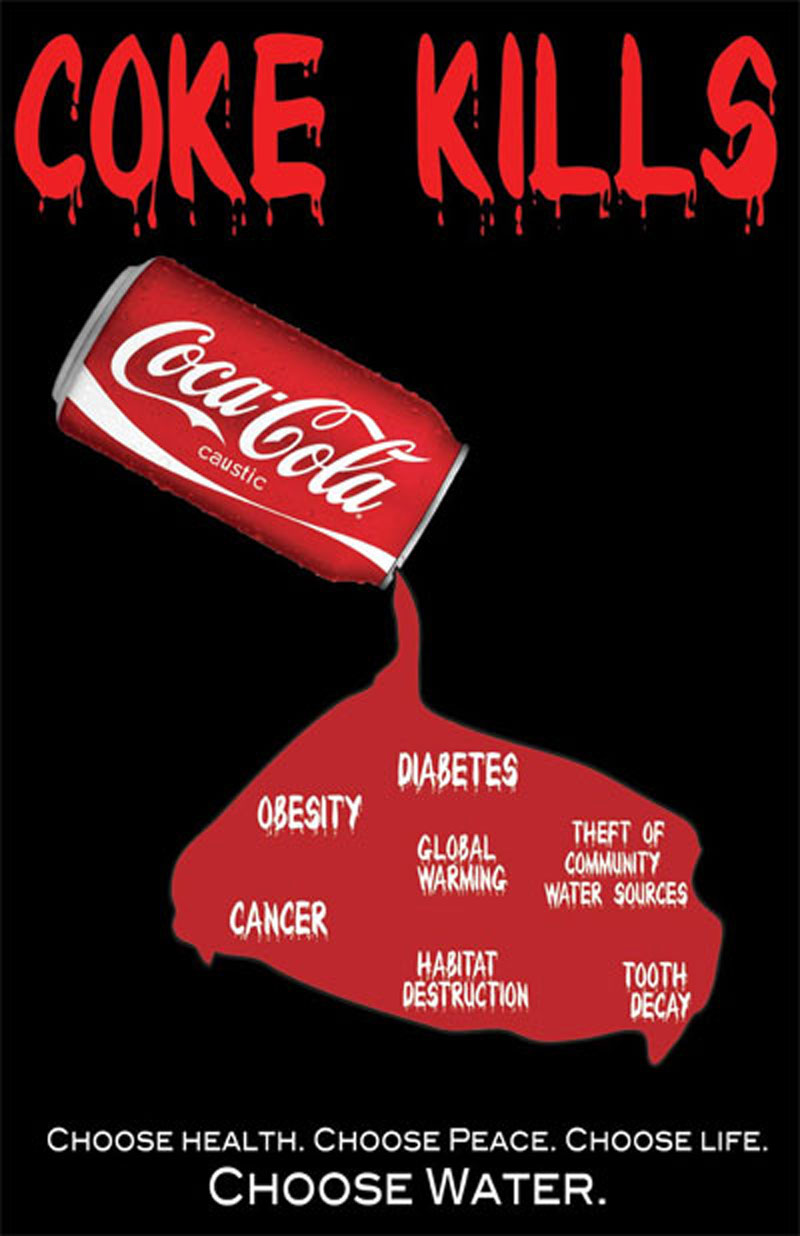
Washington Post: Coca-Cola "Big Soda Sponsored 96 Health Groups--A Big Conflict of Interest, study says"

1. Which health based interest groups are identified as receiving funding from Coke?
Shame on American Heart Association, American Diabetes Association, the Centers for Disease Control and Prevention, and the Junior Diabetes Research Foundation for getting sponsored by Coca-Cola Co. 

Image result for coca cola health issues2. What did these health-based groups do in return for Coca Cola?
These research groups publicize studies that downplay the major role of sugar in many health issues in order to make anything but sugar the enemy and boost Coke sales. 
3. What does the article claim the sugar industry did 50 years ago to the Journal of the American Medical Association Internal Medicine study?
The sugar industry had correspondence with JAMA, funding research by Harvard scientists to release study results that blamed cholesterol and saturated fat for heart disease rather than sugar. 

4. What kinds of policies is Coca Cola trying to lobby against now?
It is lobbying against soda taxes and soda bans. 

Los Angeles Times: Uber "Uber and Lyft are Winning at the State Capitol--here's why" 

5. What legislation was being considered in California that would have impacted ride sharing companies like Uber and Lyft?
The California Public Utilities Commission was planning to introduce new regulations that would have limited the ability to rent cars to drive them for Uber. 

6. How much money did those companies spend lobbying California lawmakers?
Combined, Uber and Lyft have spent nearly $900,000 on lobbying. 

7. Which political parties are giving support to Uber and Lyft?
The Democratic party is vocal in supporting the industry and the Republican party also supports the companies as well for economic reasons. 

8. Who seems to be the loser when policies regulating Uber and Lyft are not adopted? 
Union advocates greatly resent the lack of regulation for these ride-sharing companies because they believe that the lawmakers are ignoring concern for worker and consumer protections.

Thursday, October 27, 2016

2.2 Third Party Challenges and Election Outlook

FiveThirtyEight: "Long Before Trump, There Was Ross Perot"

1. What kind of voters did Ross Perot appeal to?
He appealed to the disgruntled, disenchanted, displaced non-college, white voters. 
Image result for ross perot 1992
2. What similar message do voters hear from Trump & Perot?
Trump argues that our country is being destroyed by illegal immigrants while Perot argued that our country was being destroyed by colossal debt. 

3. What similar strategy  is used by both Trump & Perot?
They both capitalized on media coverage of their charisma. Perot frequently appeared on talk shows and infomercial, similar to how Trump has received so much free media and seems to be ubiquitous. 

4. What was the result of the Perot campaign in 1992?
He received 20 million popular votes but not a single electoral vote and diverted enough votes from George H.W. Bush to allow Bill Clinton to win. 

5. Why does the author suggest that Perot helped lead to Trump's success in 2016?
Perot's relative success in garnering popular vote may have served as a guide for Trump's campaign team. Trump learned from Perot's mistake of running as an independent by running as a Republican, thus enabling him to win the nomination and get much closer to presidency than Perot could.

FiveThirtyEight: 2016 Presidential Polls 

6. What is the most likely Electoral Vote outcome at this point?
Hillary Clinton will likely win the majority of electoral votes, currently having 329.9, as opposed to Donald Trump's 206.9

7. What was the only date in which Trump had a better chance of winning the election than Clinton?
July 30th

8. What % chance does Clinton have of winning the election today? 
82.6%  #nastywoman

9. Which date did she have the best chance of winning the election?
August 14th, having a chance of 89.2%

10. Which 3 states (or districts) does the forecast predict Clinton will win by the biggest margin?
California (>99.9%), the Northeast like New York (>99.9%) and Massachusettes (>99.9%), and the Chesapeake area like Maryland (>99.9%)

11. Which 3 states does the forecast predict Trump will win by the biggest margin?
Oklahoma (99.8%), Alabama (99.7%), and West Virginia (99.5%)

12. What % chance does Clinton have of winning the popular vote?  How about Trump?
49.5% for Clinton
43.5% for Trump

13.  HOW ABOUT GARY JOHNSON?
A whopping 5.4%!!!!!!!!!!!!!!!!!!!!!!!!!

Friday, October 21, 2016

2.1 Do the Debates Matter?


Vox.com: "Do Presidential Debates Matter? Here's the Political Science Evidence." 
Image result for trump and hillary debate meme1. Right before the first debate, how close was the race?  How much do debates typically impact the polls?
Clinton was leading Trump by 3 percentage points. Debates can make small but impactful changes in the poll especially when the race is tight as it is this time.

2. Why are these debates less important than the debates that take place in the primaries?
In the primaries, the public is generally unfamiliar with the nominees, so making lasting impressions during the primaries is crucial for a politician to want to succeed in the future. However, by the time presidential polls come around, most viewers have already decided who they will vote for and will not usually change their minds. 

3. Why can we not be sure that the debates themselves are what causes changes in the polls during the debate season?
There are too many confounding factors to extrapolate a cause-and-effect relationship between debates and the polls. The circumstances of the country, whether it is economic status or social climate, all play into minor poll changes that occur around debate season. 

4. How was the Obama-Romney campaign affected by the first debate?
Obama lost his 4-percentage point lead to Romney after a poor first debate. 

5. What aspects of Richard Nixon & Al Gore's debate performances may have swung the outcome of elections?  Is this related to how they would perform as president in any way?
Nixon had an unappealing public image during his debates against JFK, sweating and without TV makeup, which impacted the outcome. Al Gore gave an infamously loud sigh during his debate which cost him the election to Bush. However, these were both stylistic reasons and do not indicate their credentials as president. 

6. How might low expectations of Trump's performance end up helping him?
Because Trump was deemed too ridiculous to be of worth, many people saw him as unlike the typical, sly, lying "politician" persona and more of an "ordinary" person, which won him voters. 
7.  How can the media impact what people think about the performances in the debate?
The media can actually influence people's reaction to debates even more than the debate itself by selecting specific moment in the debate to highlight. 

8. How did the Arizona State study measure the media's effects on people's perception? What was the result of their study?
They got three groups of people, showing one group an entire 90-minute debate between George Bush and John Kerry in 2004, one an entire debate plus a 20-minute NBC commentary, and the final group an entire debate plus a 20-minute CNN commentary. They saw that those who just watched the debate and those who watched the debate with CNN commentary thought Kerry won the debate, while those watching the debate with NBC commentary though Bush won.